

Product Description
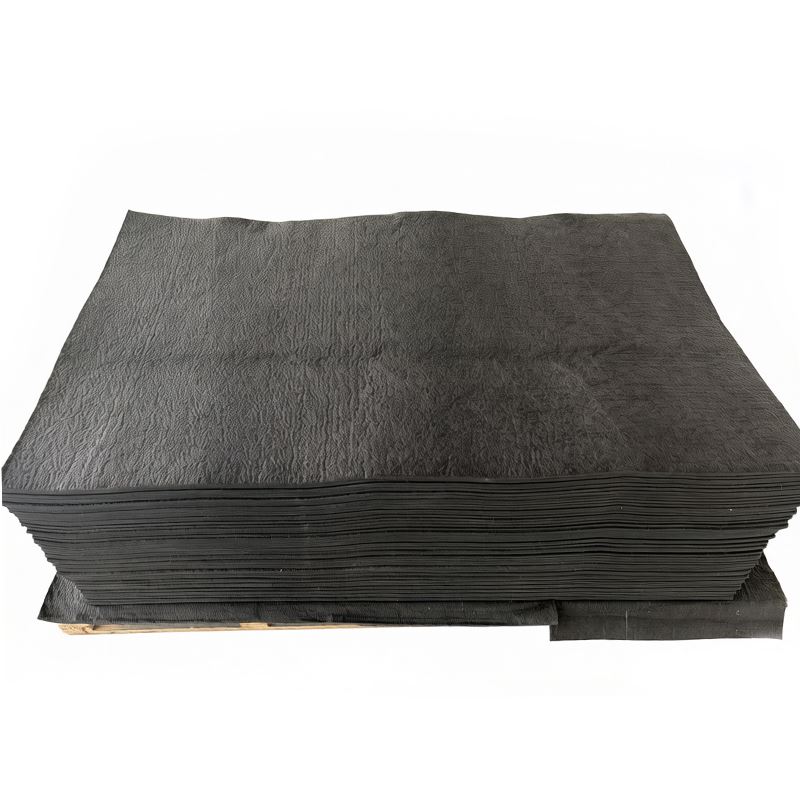
PET Filament Acoustic Felt is a lofty continuous-fiber nonwoven built mainly for automotive sound control. It uses core-sheath PET filaments with a modest share of low-melting-point material, so the sheath bonds the fiber intersections without collapsing the loft. High porosity lets road noise, electric-motor sound, and cavity noise enter the connected pores, travel through the fiber network, and lose energy. The lofty, open pore structure is what separates this acoustic felt from dense barrier materials that block rather than absorb. The material is particularly suitable for controlling medium- and high-frequency sound in vehicle interiors and enclosed automotive spaces, where an open, absorbing structure outperforms a closed barrier.
For an acoustic felt, the buying logic is grade selection by cavity, not by a single stock thickness. Headliner layers, pillar cavities, door liners, trunk sides, and inverter housings each call for a different basis weight and loft, with aluminum foil or aerogel added where thermal protection joins the acoustic task. The material keeps a broad long-term service temperature range and resists moisture, and it stays single-material PET for recycling. Selecting the grade to the cavity rather than the catalog thickness means buyers pay for acoustic mass only where the noise problem actually sits, and it keeps headliner and door layers light, supporting the wider push to cut vehicle weight.
Specifications
|
Parameter |
Specification |
|
Conventional PET : Low-Melt PET Ratio |
75-85:15-25 |
|
Basis Weight |
200-600 g/m2 |
|
Lofty Thickness |
10-30 mm |
|
Porosity |
85%-98% |
|
Long-Term Service Temperature |
-40 C to +120 C |
|
NRC (20 mm + 50 mm gap) |
About 0.70-0.80 |
|
Airborne Sound Attenuation |
25-35 dB (350 Hz - 10 kHz) |
|
Water Absorption |
<=0.5% (<=0.1% after water-repellent treatment) |
Applications
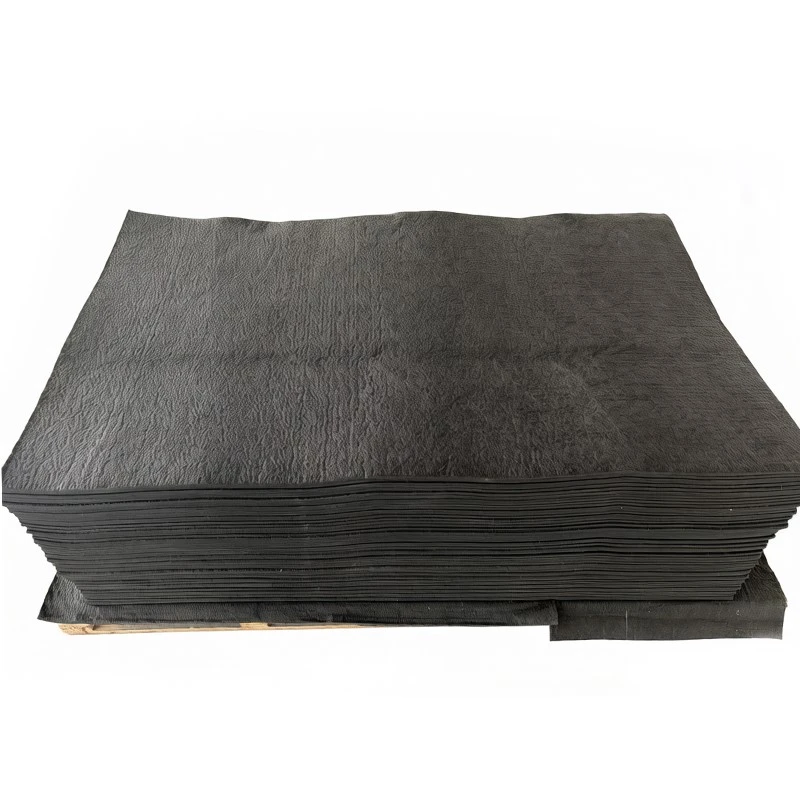
Headliners, pillars, and door-panel acoustic liners: the lofty porous network absorbs mid-to-high-frequency interior noise.
Trunk side acoustic components and inverter/electrical-control housings: soft felt layers damp electric-motor and cavity noise.
Battery thermal pads with aerogel: acoustic felt combined with thermal layers where both noise and heat must be managed.
Customization
Basis weight (200-600 g/m2); lofty thickness; NRC grade by thickness and rear air-gap design; water-repellent treatment; optional aluminum foil or aerogel lamination; shaped cut components from rolls; OEM and ODM supported.
Packaging & Transportation
All PET Filament Acoustic Felt components are traded on EXW terms, with payment made in advance. Packaging is arranged according to customer requirements, including carton or pallet options and edge or pressure-point protection as needed. Specific outer-carton dimensions, pallet configuration, and loading method: To Be Confirmed. Production photos or videos can be supplied during manufacture, and damaged goods on arrival are resolved by mutual negotiation.
FAQ
Q: How do thickness and air gap affect NRC?
A: A 20 mm layer alone gives about NRC 0.55-0.65; with a 50 mm rear gap it reaches 0.70-0.80, and 30 mm plus a 50 mm cavity reaches 0.75-0.85.
Q: What temperature range does PET Filament Acoustic Felt handle?
A: Long-term -40 C to +120 C, with short-term tolerance to 180 C for 30 minutes, and water absorption below 0.1% after water-repellent treatment.
Q: Can rolls be converted to shaped parts?
A: Yes - rolls can be processed into door, pillar, headliner, and trunk components; custom samples take about 10-15 days.
Hot Tags: filament acoustic felt, China filament acoustic felt manufacturers, suppliers, factory, automotive acoustic pads, PET Continuous Filament Felt, pet continuous filament nonwovens, PET Filament Acoustic Felt, PET spunbond composite material, PET spunbond substrate material