


Three-Dimensional Forming without Excessive Hardness
PET Soft Thermoformed Felt is made from conventional high-melting-point PET fibers and low-melting-point LMPET fibers. Their normal weight ratio is 75–85:15–25.
During hot pressing, a limited amount of LMPET bonds only at the fiber intersections. The conventional PET fibers continue to form the main supporting network.
As a result, the material can hold a three-dimensional shape while remaining soft, lofty, and porous.
Unlike flat filling cotton, the felt can be thermoformed to follow automotive headliners, door panels, carpets, and body cavities. Unlike high-density rigid felt, the finished part continues to provide cushioning, compression recovery, sound absorption, and thermal insulation.
This makes it suitable for components that need to maintain a defined shape without becoming a hard structural panel.
Fiber Options for Different Functions
Conventional PET fibers have a linear density of 1.5–6.7 dtex and a diameter of 12–25 μm. They form the main internal framework.
Low-melting-point LMPET fibers have a linear density of 2.2–4.4 dtex and a diameter of 14–20 μm. They provide thermal bonding and help the material retain its molded shape.
Hollow PET fibers with a linear density of 3.3–6.7 dtex can be used to improve loft and thermal insulation.
Microfine PET fibers with a linear density of 0.1–1.0 dtex and a diameter of 1–5 μm can be added to improve medium- and high-frequency sound absorption.
LMPET melting points range from 110 to 180°C, with 110°C and 130°C being common options. Conventional PET fibers have a melting point of about 256°C.
Density, Thickness, and Recovery
Raw-felt basis weight ranges from 200 to 1,200 g/m². Automotive acoustic layers commonly use 400–800 g/m².
Finished density ranges from 0.02 to 0.15 g/cm³, while typical automotive products use 0.03–0.08 g/cm³.
Thickness can be adjusted from 5 to 40 mm, with 10–25 mm being common in vehicle applications. Porosity ranges from 70% to 95%, while typical automotive grades provide 85%–92%.
After remaining under 50% compression for 24 hours, compression recovery is at least 70%. Typical automotive grades can reach at least 80%.
Thermal conductivity is 0.032–0.045 W/(m·K). PET Soft Thermoformed Felt can therefore provide both acoustic absorption and thermal buffering.

Shaped Automotive Parts and Custom Production
Applications include headliner soft layers, door-panel liners, main-carpet acoustic layers, A/B/C pillar filling, trunk linings, battery-pack thermal pads, and body-cavity cushioning components.
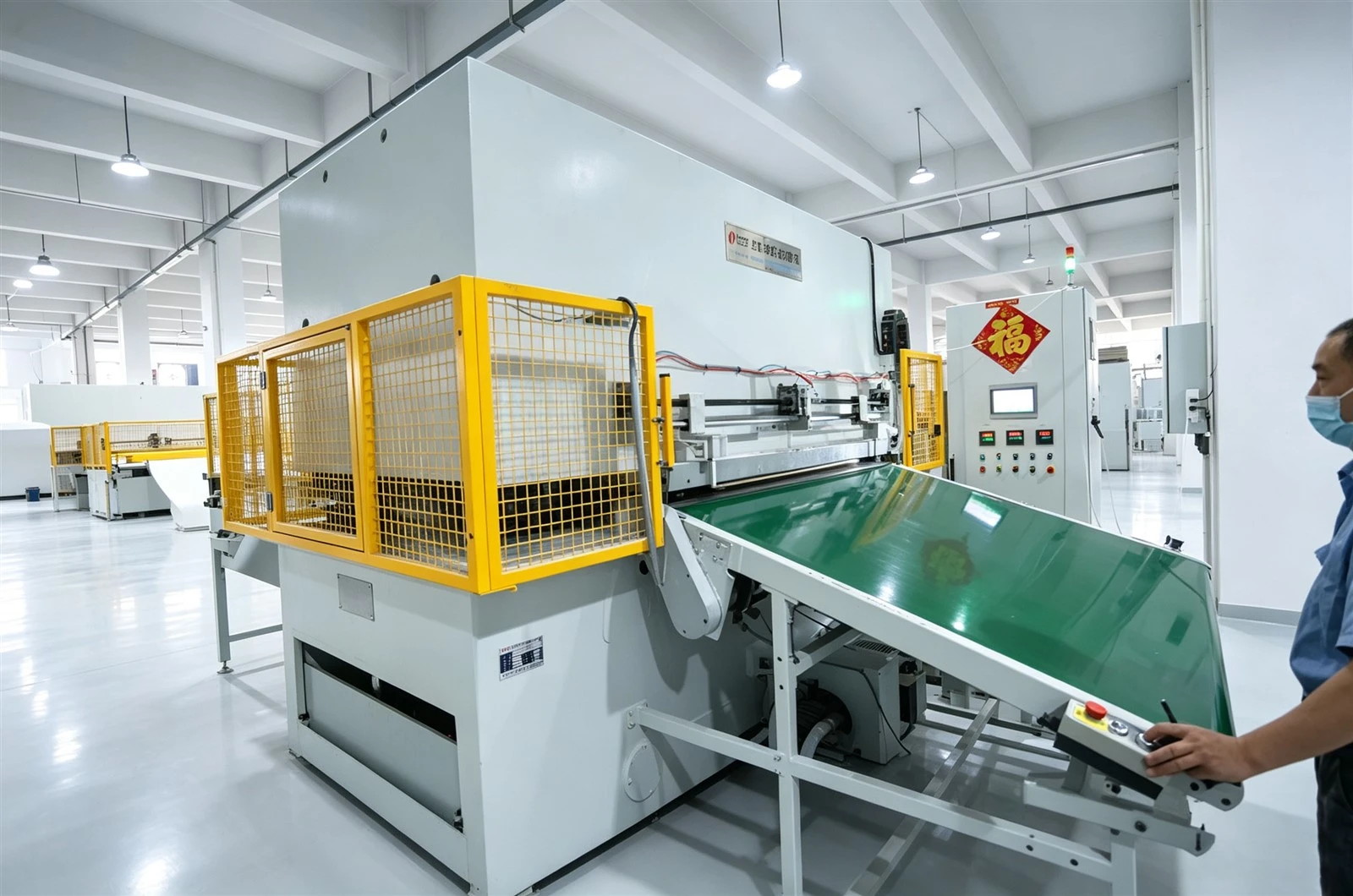
Jiangsu Haokai can adjust the fiber ratio, raw-felt weight, formed thickness, and local density according to component curves, compression space, and acoustic requirements.
Custom parts can include different thickness zones, holes, and clearance areas. Samples normally require 10–15 days, and standard or custom production generally takes 7–15 days.
Finished products receive 100% inspection before shipment. Packaging can include separators or controlled compression according to the component shape and recovery requirements.
Product Specifications
|
Parameter |
Specification |
|
Conventional PET to LMPET Ratio |
75–85:15–25 |
|
Raw-Felt Basis Weight |
200–1,200 g/m² |
|
Finished Thickness |
5–40 mm |
|
Porosity |
70%–95% |
|
Compression Recovery |
≥70%; typical automotive grades ≥80% |
Hot Tags: pet soft thermoformed felt, China pet soft thermoformed felt manufacturers, suppliers, factory, automotive interior components, PET Molded Automotive Felt, PET Rigid Thermoformed Felt, PET Soft Thermoformed Felt, PET Structural Felt Liner, PET Thermoformed Acoustic Felt